
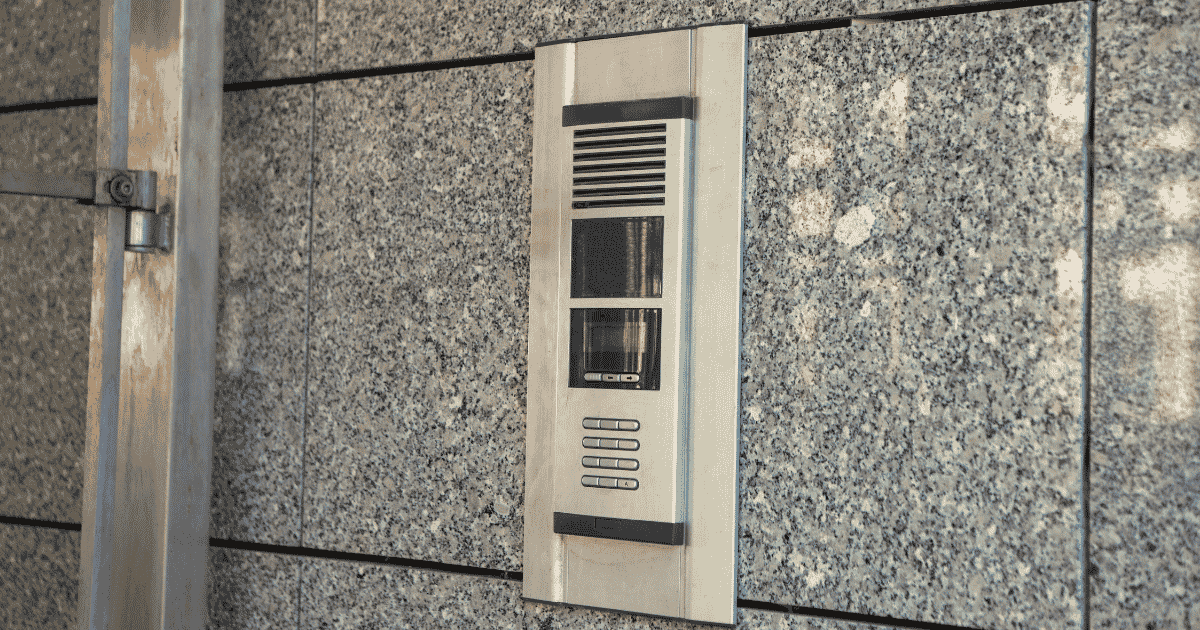
Ask a property manager in Metro Vancouver how the intercom is doing at one of their buildings and you will usually get a shrug. It works. Sort of. There are four units where the handset is dead, the directory still lists an owner who sold in 2022, and half the residents have given up and just text people to come down and open the door.
That is how most of these projects actually begin. Not with a plan, but with a system that has been quietly falling apart for years until something forces the issue. A part that cannot be replaced. An incident in the lobby that nobody can review because there is no footage and no log. An insurance renewal asking questions the council cannot answer.
By the time it reaches the agenda, the real question is no longer whether to modernize. It is whether to keep repairing a system running out of parts, retrofit what is already in the building, or replace the whole thing.
We work on entry, access control and camera systems in strata and multifamily buildings around the Lower Mainland, so we sit in this conversation often. Here is how to think it through before going out for quotes.
Signs a Strata Intercom Is Near the End
A dead handset is a repair, not a replacement. What follows is about patterns rather than single faults.
| What the council is seeing | What it usually points to |
|---|---|
| Parts are hard to source, or the manufacturer no longer supports the product | The strongest single signal. Once parts come from salvage, every fault becomes an unplanned cost with an unpredictable lead time. |
| Service calls have gone from occasional to routine | Worth adding up. Councils are often surprised by the annual figure once three or four years of invoices sit side by side. |
| The directory is out of date and updating it means a service call | An operational problem rather than a technical one, and the complaint property managers hear most. |
| No record of who was let in, or when | Older systems generally keep no log. After an incident there is nothing to look at. |
| Audio only, so residents cannot see who is at the door | Usually the reason residents start pushing the council to act. |
| Tailgating, propped doors and parcel theft at the entrance | Entry control and camera coverage are both involved. Look at them together, not separately. |
| Fobs have been copied, or nobody knows how many are out there | A credential problem rather than an intercom problem, but the two usually get solved in the same project. |
One of these on its own is not much. Three or four together usually means the building is spending money maintaining something it is going to replace anyway.
Visitor Management: What Actually Happens at Your Front Door
Most buildings have no real process at the entrance. Someone buzzes, a resident answers, the door opens. Nobody knows who came in, and nothing is recorded.
That worked when visitors were mostly people you knew. It works badly now, when the majority of daily traffic at a residential entrance is couriers, food delivery, trades and short-term guests.
What a current video intercom changes, depending on the platform and how it is set up:
- The resident sees who is there before deciding. Video at the entry panel, answered on a screen in the suite or on a phone.
- Calls can reach residents who are not home. On most multifamily platforms a visitor call can be answered remotely rather than only from inside the unit.
- Entries get logged. A record of who was granted access and when. This is the piece councils miss most after an incident.
- Deliveries can be handled on purpose rather than by accident. Several platforms offer some form of managed delivery access. What is available and how it behaves differs between systems, so confirm the specifics for whichever one is on the table.
- Trades and cleaners can be given temporary access. Time-limited rather than a fob handed over and never returned.
The delivery point matters more than it sounds. In most buildings we work in, propped doors and parcel theft trace back to couriers having no sensible way in. Fix the entry process and a lot of the downstream problems get quieter on their own. Where they do not, entrance camera coverage is the next thing to look at.
Need a straight answer on your building?
We survey the building first: existing cabling, entry hardware, network and door conditions. Then we tell you whether you are looking at a repair, a retrofit or a replacement. Sometimes the answer is that the current system has a few years left in it, and we will say so.
Call or request a site assessment.
Mobile Credentials and What They Solve
Fobs have one structural problem: you have to physically get them back.
When a tenant moves out and does not return a fob, most buildings do nothing, because deactivating one credential in an old system is either difficult or nobody is sure which number belongs to which unit. Multiply that across a decade of turnover and no council can say how many working credentials exist.
Mobile credentials can generally be issued and revoked remotely, without collecting hardware. For a property manager handling regular turnover, that changes the work from a physical task into a few minutes at a desk.
Whether your existing credentials can carry over depends on the technology currently in use and the access control platform being considered. In some projects they can. In others they are replaced as part of the work. If fob cloning is already a concern in the building, replacing them at the same time usually costs less than doing it as a separate project later.
Replace or Retrofit? Options for an Existing Building
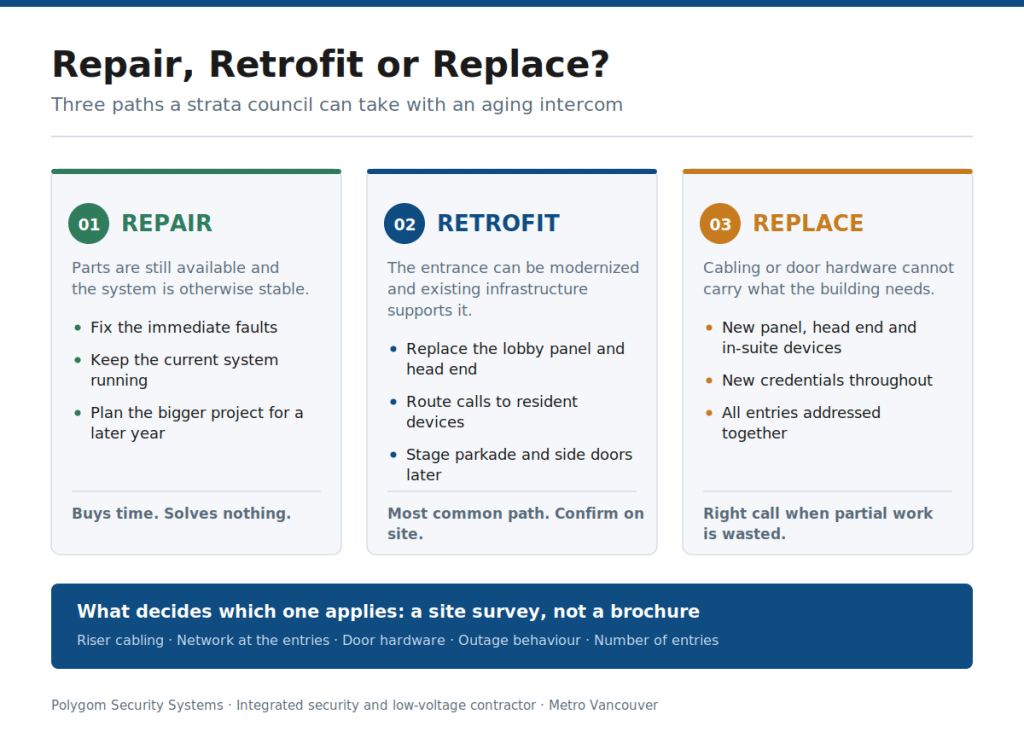
Councils often assume modernization means opening walls in every unit. In a lot of buildings it does not. But whether a retrofit is workable depends on what is already in place, and that is a question a site survey answers rather than a brochure.
| Approach | What it involves | When councils consider it |
|---|---|---|
| Repair and extend | Fix the immediate faults and keep the system going. | Where parts are still available and a larger project is already planned for a future year. |
| Entry panel modernization | Replace the lobby panel and the head end, and route calls to resident devices instead of in-suite handsets. | The most common retrofit path, because the work stays concentrated at the entrance. Feasibility depends on existing infrastructure and has to be confirmed on site. |
| Staged modernization | Main entrance first, then parkade, amenity doors and secondary entries in later phases. | Where the budget has to spread across more than one fiscal year, which is normal in strata planning. |
| Full replacement | New panel, new head end, new in-suite devices or app-based answering, new credentials throughout. | Where the existing cabling or door hardware cannot support what the building needs, or the system is far enough past support that partial work is not worth doing. |
What Decides Whether a Retrofit Is Practical
This cannot be answered from a floor plan or over the phone. Two buildings of the same age and size regularly give different answers.
What we look at on a survey:
- Existing cabling. What is actually in the risers, what condition it is in, and whether it can carry what the new system needs. Assuming here is where retrofit projects go wrong.
- Network at the entrances. Most current platforms need a reliable connection at the entry point. Whether that exists or has to be run changes the scope, and sometimes the network and structured cabling work is a project in itself.
- Door hardware and strikes. The intercom releases the door, but the door has to be in decent shape for any of it to mean anything. Worn strikes and misaligned closers undo the rest of the work, which is why door hardware often ends up in scope.
- Power at the panel and head end, including what happens during an outage.
- Number and type of entries. Main lobby, parkade, bike room, amenity doors and rear entries each behave differently.
- What access control is already there. Whether it stays, gets replaced, or has to work alongside the new intercom.
- Existing cameras. Whether the entry cameras are worth keeping and how they should relate to the intercom.
We would rather tell a council after a survey that a straightforward retrofit is not realistic in their building than promise one up front and discover it halfway through installation.
Intercom, Access Control and Cameras Are One Conversation
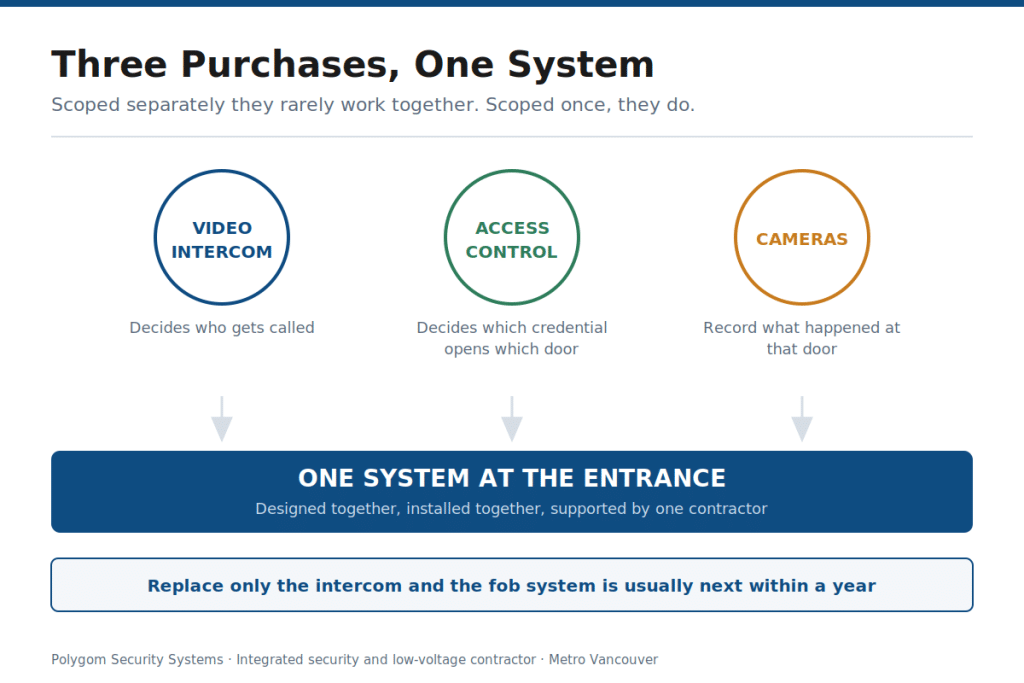
These three usually arrive as separate line items, often from separate vendors, and that is exactly how a building ends up with three systems that each work but do not work together.
In practice they are one problem. The intercom decides who gets called. The access control decides which credential opens which door. The cameras record what happened there. A council that replaces only the intercom often finds a year later that the fob system is next, and that the two were never designed to talk to each other.
How closely any particular set of products can be integrated depends on the specific platforms and on the building’s infrastructure. Ask a prospective vendor to be concrete about it for your combination rather than accepting a general assurance that everything works together. We would give you the same answer: we confirm it for the platforms involved before it goes into a proposal. We wrote more about how these systems fit together in our guide to integrating cameras, alarms and access control.
What Property Managers Need That Councils Often Forget
Councils tend to scope these projects around the entrance. Property managers live with the system afterwards, and their requirements are different. Worth raising before the scope is finalized rather than after.
- Who updates the directory, and how fast. Turnover is constant. If every move-in needs a service call, you have moved the problem rather than solved it.
- How credentials are issued and revoked. Same question. If it takes a technician, it will not get done consistently.
- Who holds administrative access. The management company, the strata, or the vendor. This matters enormously if the building changes vendors later.
- What reporting is available. Access logs, entry events, and how far back they go.
- Service response times. A failed entry system at a residential building is an urgent problem, not a next-week problem. Ask what response time is committed to in writing.
- Ongoing costs. Platform fees, hosting, monitoring and support, separated from the installation price.
- What happens during an outage. Power and network. Residents still need to get in.
- How residents get onboarded. Who walks a building of 80 units through setting it up, and what happens for residents who will not use an app.
That last one is underestimated constantly. The technical install is the easy part. Getting every resident actually using the system is where these projects succeed or quietly fail, and it should be named in the scope rather than assumed.
For buildings that want a set of eyes on the system after it is in, ongoing live video monitoring and a scheduled maintenance program are worth pricing at the same time rather than later.
Platforms We Work With
We install, integrate and service a range of commercial and multifamily platforms including SALTO, 1VALET, ButterflyMX and Avigilon, along with other systems used in this market.
We are deliberately not a single-brand shop. The right platform for a building depends on the existing infrastructure, the integration requirements, how the property is managed and what the owners actually need. A system that suits a new concrete high-rise with structured cabling throughout can be the wrong answer for a 1980s wood-frame walk-up, and the reverse is also true.
So the order matters. Building first, platform second. If a council has already chosen a platform, we will work with that decision and tell you plainly if we think the building is going to make it difficult.
What to Ask For in a Quote
Intercom proposals are hard to compare because vendors scope them differently. Asking for these makes comparison possible:
- A written scope naming every entry point included, and every one excluded.
- What happens to existing cabling: reused, replaced, or to be determined after further investigation.
- Whether door hardware work is included or quoted separately.
- How resident onboarding and directory setup is handled, and by whom.
- Ongoing costs after installation, itemized.
- Warranty terms, split into parts and labour.
- Service response times, and whether a maintenance agreement is offered.
- Who holds administrative access, and what happens if the building changes vendors.
- Business licence, liability insurance and WorkSafeBC coverage in good standing.
That last group is not a formality. Work in occupied multifamily buildings involves common property, resident access and coordination with a property manager. An uninsured crew on site creates exposure for the strata.
The Short Version
If parts are getting hard to find and service calls have become routine, the decision has mostly been made for you. What is left is whether the building can be modernized in stages or needs a full replacement, and a survey settles that, not a brochure.
Do not scope the intercom on its own. Entry, credentials and cameras are one system in practice even when they arrive as three purchases, and councils that treat them separately usually pay for the same disruption twice.
And be careful with anyone who tells you what will work in your building before they have looked at it. At that stage the honest answer is always that it depends on what is behind the walls.
Talk to a contractor who works in these buildings every week.
Polygom Security works with strata councils, property managers and building owners across Vancouver, Burnaby, North Vancouver, Port Moody, Surrey and the surrounding Lower Mainland. Video intercom, access control, CCTV, alarm systems and monitoring, structured cabling and networking, delivered and supported by one contractor. New installations, modernization and retrofit work in occupied buildings.
Call or request a site assessment. You can also browse our completed projects.
Frequently Asked Questions
How long does a strata intercom last before it needs replacing?
There is no fixed lifespan, and age alone is a poor guide. The more useful signal is parts availability and manufacturer support. Once replacement parts are hard to source, every fault becomes an unplanned cost with an unpredictable timeline, and that is usually when councils start planning.
Can a video intercom be installed without rewiring every suite?
In many existing buildings some form of retrofit is possible, but it depends on what is in the risers, the condition of that cabling and whether the entries have network access. This is what a site survey is for. Be cautious of anyone who answers this before looking at the building.
Does the whole building have to be done at once?
Not necessarily. Staged work is common in strata projects, often starting at the main entrance and adding the parkade, amenity doors and secondary entries later. Whether staging suits your building depends on the system selected and how the entries are wired.
Do residents need a smartphone to use a modern intercom?
It depends on the platform and the configuration. Most systems built for multifamily buildings offer more than one way to answer, because councils generally need an option for residents who will not use an app. Confirm what alternatives exist for the specific system being proposed.
What happens to our existing fobs?
That depends on the credential technology currently in use and the access control platform under consideration. In some projects existing credentials carry over, in others they are replaced as part of the work. If fob cloning or unaccounted credentials are already a concern, replacing them during the same project usually costs less than doing it separately later.
Who manages the resident directory after installation?
On most current platforms the directory is managed through software rather than by a technician, which means the property manager or the strata can handle move-ins and move-outs directly. Confirm during procurement who holds administrative access, because it matters a great deal if the building changes vendors later.
What happens if the power or internet goes down?
Behaviour during an outage varies between systems, and it is worth asking about specifically rather than assuming. Backup power and failure behaviour at the door should both be named in the proposal.
Does a new intercom need to go to an owner vote?
It depends on the scope and how it is funded, and the answer differs between buildings. Your strata manager or the strata’s legal advisor is the right source. Confirm it early, because approval timelines affect the project schedule more than the installation does.
Can the intercom work with our existing cameras and access control?
Sometimes, and it depends on the specific products involved. Rather than accepting a general assurance, ask a vendor to confirm it for your exact combination before it goes into a proposal. That is what we do before quoting.
Do you only work with one brand?
No. We work with several commercial and multifamily platforms including SALTO, 1VALET, ButterflyMX and Avigilon, and we are not tied to any of them. We look at the building, the existing infrastructure and the requirements first, then recommend accordingly. If a council has already chosen a platform, we will work with it and say honestly whether the building is likely to make that difficult.


