
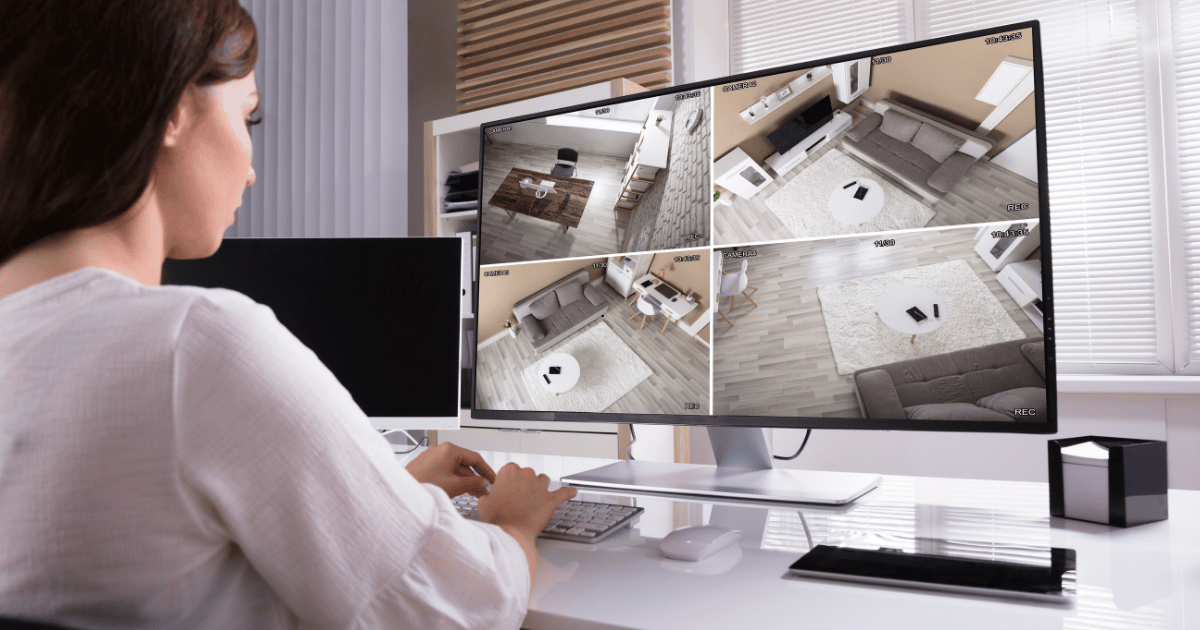
Two properties can own almost identical camera hardware and get completely different things from it. On the first, the cameras record and someone pulls the footage the next morning. On the second, an operator elsewhere is watching selected feeds live and can speak to a person standing in the parkade at two in the morning.
Those are different services solving different problems, and the choice between them is not about camera quality. It is about what you want to happen while the event is still happening.
What recorded CCTV actually does
A recorded system captures video to a recorder on site or to the cloud, keeps it for a set retention period, and makes it searchable afterwards. Nobody is watching it in real time. For most commercial and multifamily buildings this is the baseline, covering the lobby, the parkade entrance, the mail room and the amenity doors. It is doing real work:
- Establishing what happened, in what order, and who was present
- Supporting an insurance claim or a police report with something better than a description
- Settling disputes between tenants, residents or contractors about an incident that nobody witnessed
Its limitation is simple. Recording tells you what happened. It does not change what happened.
What live video monitoring adds
With live video monitoring, an operator at a monitoring centre reviews activity as it occurs and can act on it. The operator is not staring at a wall of screens. Analytics flag activity matching defined criteria, such as a person entering a zone after hours, and that event is presented for assessment. Depending on how the service is set up, the response can be:
- Speaking through an on-site speaker to the person in view
- Dispatching a guard or a patrol
- Contacting the property manager, the site contact or police
The value is in the opportunity to intervene while an event is unfolding. Where an on-site speaker is installed, an operator can issue a location-specific warning and follow the agreed escalation procedure. This may help deter further activity, but it does not guarantee that a person will leave or that a loss will be prevented.
The question that decides which one a site needs
Ask what you would want to happen at two in the morning. If the honest answer is that you want to review it in the morning, recorded video is the right tool, and monitoring is an expense without a matching return.
If the answer is that you want someone to interrupt it, that is monitoring, and no amount of additional camera resolution gets you there.
Not sure which parts of your site justify monitoring?
That assessment is specific to the property: where the exposure actually is, what the cameras currently cover, what the network can support and what hours matter. We will look at the site and tell you which areas warrant live monitoring and which are adequately served by recording alone.
Call Polygom Security Systems on , or request a consultation. Serving Vancouver, Burnaby, North Vancouver, Port Moody, Surrey and the Lower Mainland.
Where each one tends to fit
Construction sites
The clearest case for monitoring. The site holds significant value in materials, tools and equipment, nobody is present overnight, the perimeter is defined, and the exposure has a known end date. Recording alone on an unoccupied site documents a loss that has already happened.
Parkades
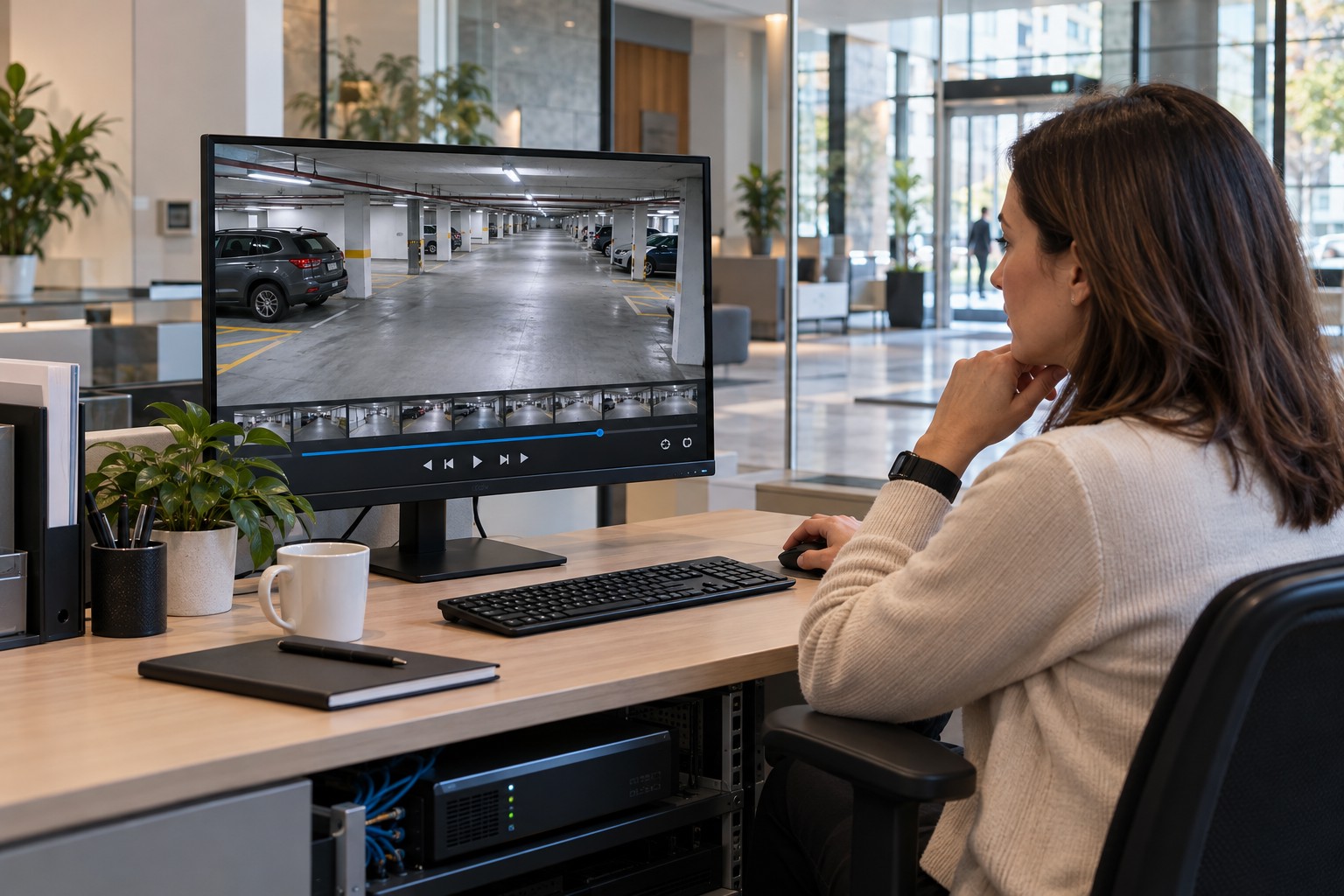
Recording is the baseline for every parkade: vehicle damage, incidents at the door, disputes about access. Monitoring becomes worth discussing where there is a recurring overnight problem rather than occasional events, and where the lighting and camera placement can actually support an operator making a judgement.
Commercial and retail premises after hours
A closed site with a defined footprint is straightforward to monitor on a schedule. Monitoring during business hours is a different proposition, because distinguishing a customer from a problem is not something analytics do reliably on their own.
Multifamily and strata common areas
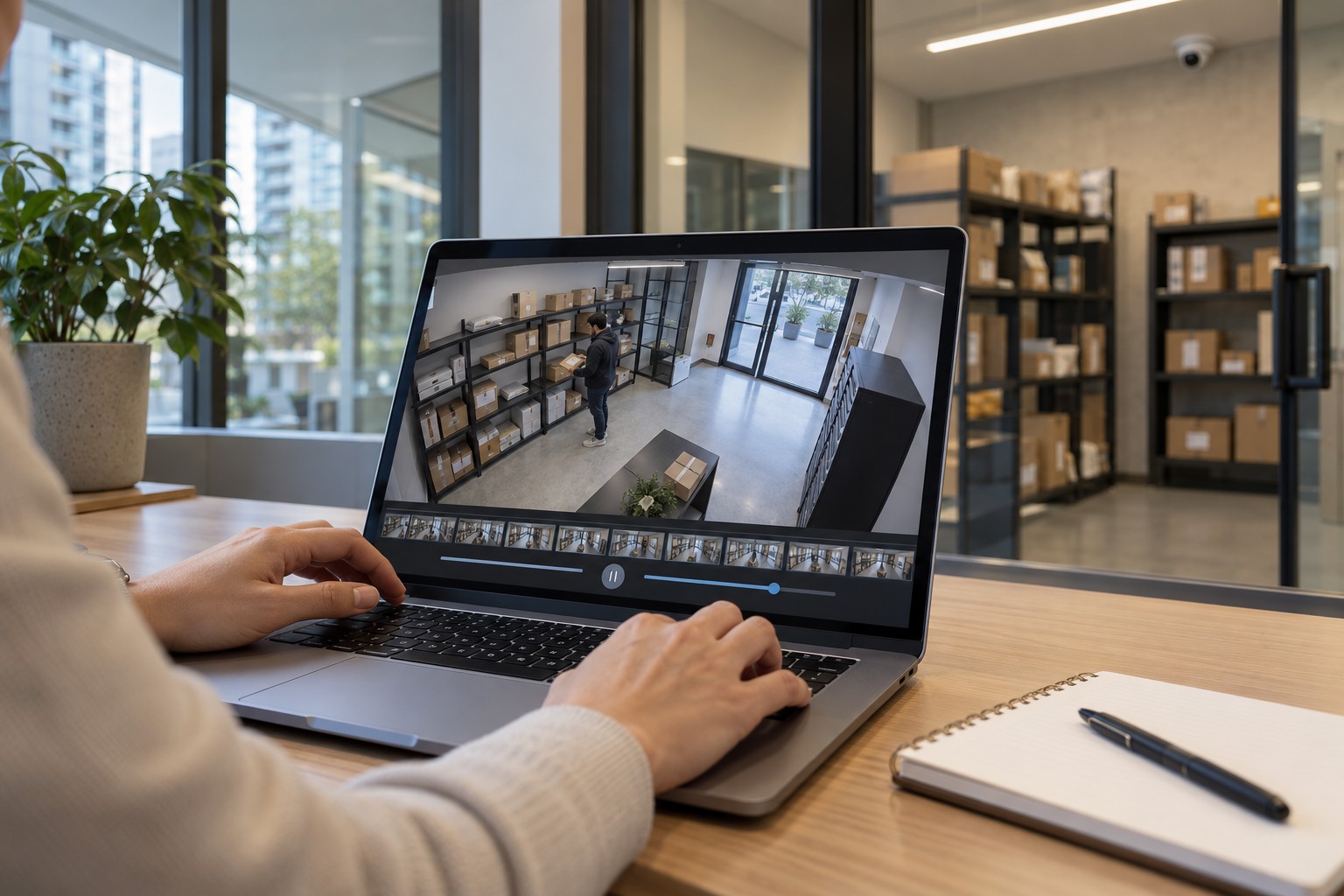
Lobbies, corridors, mail and parcel rooms, bike storage and amenity spaces are almost always recorded rather than monitored. These are occupied spaces with legitimate traffic at all hours, which makes continuous monitoring both expensive and difficult to act on.
Where monitoring is sometimes added in multifamily is at a specific problem point, such as a loading area or a rear entrance, and usually for a defined period rather than permanently. The more common improvement in these buildings is at the entrance itself, which is an access control and intercom question rather than a camera one. We covered the entrance side of that in our article on when a strata should replace or modernize its intercom system.
What has to be true before monitoring works
Monitoring is a service layered onto an installation, and the installation determines whether the service performs. Four things matter more than the rest.
The network has to carry it. Live feeds leaving the building consume upload bandwidth continuously, and many commercial connections are provisioned with far more download than upload. This is checked before a monitoring service is proposed, not after it is underperforming. Where the connection is not adequate, the network and communications work comes first.
The analytics have to be tuned to the site. An untuned system that reports headlights, rain, a cat or a flag moving produces so many events that genuine ones stop being treated seriously. Tuning is site work: defining zones, setting object criteria, and adjusting over the first weeks of operation.
The site has to be usable at night. An operator cannot assess what they cannot see. Camera placement for detecting that someone is present and placement for identifying who they are are different problems, and lighting determines whether either is possible. A site that is genuinely dark will need lighting addressed alongside the cameras.
Where cameras, access control and alarm systems are expected to work together, what is achievable depends on the specific platforms installed. That is a question we answer by looking at what is actually on the site rather than in general terms, and we wrote about how that assessment works in our piece on security system integration with cameras, access control and video intercom.
How the costs are structured differently
The two sit in different places on a budget, which matters for how approvals work.
Recorded CCTV and security surveillance camera installation is principally a capital cost: equipment, cabling, configuration, and storage. Once installed, the ongoing cost is maintenance and eventual replacement.
Live monitoring is principally an operating cost. It is a recurring service, usually structured around the number of cameras monitored and the hours covered, on top of whatever the installation cost.
For a strata, that distinction is not academic. A capital item and a recurring operating item are approved differently and drawn from different funds, and a proposal that does not separate them clearly is harder to get through. What drives either figure on a given property is covered in our article on what determines the cost of a commercial security system in Metro Vancouver.
Privacy obligations apply to both
Organizations in British Columbia collecting personal information through video are subject to provincial privacy legislation, and video of identifiable people is personal information. Live monitoring adds a further consideration, because people are viewing activity as it happens rather than reviewing it afterwards.
The requirements that come up most often are notification signage where recording begins, retention for no longer than the purpose requires, controlled access to footage, and care about camera orientation. Specific obligations for a given property are worth confirming with the strata’s or the organization’s own advisers.
Deciding for a specific property
Five questions usually settle it. A site that is empty overnight, has a repeating problem and would benefit from an intervention is the straightforward case for monitoring. A site with occasional incidents in an occupied building is usually better served by improving coverage, retention and entry control.
- Is the site occupied during the hours of concern, or empty?
- Has there been a recurring problem, or isolated incidents?
- Would an intervention at the moment of the event have changed the outcome?
- Can the network, the lighting and the camera positions support an operator making a judgement?
- Is there a recurring budget, or only a capital one?
Frequently asked questions
Can live video monitoring be added to cameras we already have?
Sometimes. It depends on what the existing cameras are, what the recorder supports, whether analytics can be applied, and whether the connection can carry the feeds. This is assessed on the specific equipment installed rather than answered in general, and the honest answer on some older systems is that the cameras need replacing first.
Does monitoring replace recording?
No. Monitored sites still record. The recording remains the evidence, and the monitoring is the response layer on top of it.
Is monitoring always 24 hours a day?
Not usually, and it often should not be. Most arrangements cover the hours when a site is unoccupied or exposed. Scheduling monitoring to the hours that matter keeps the service proportionate to the problem.
What happens when the operator sees something?
That is defined in advance in a response procedure agreed with the property. It sets out what is assessed as an event, what the operator does first, who is contacted and in what order. It is worth going through in detail at the outset, because it is the part that determines whether the service does what you expected on the night it matters.
Which one suits a strata building?
In most cases, recording across the common areas with entry control at the doors, rather than continuous monitoring. Monitoring is considered where there is a specific, recurring problem at a defined location. What applies depends on the building, and it is worth having someone look rather than deciding from a general rule.


